Ross at 70: Building the foundations of balanced breeding
 This year, Aviagen proudly marks 70 years of Ross® broiler breeders.
To recognize this milestone, we’re sharing the Ross story through the voices of three passionate poultry professionals: Jim McAdam, retired Breeding Program Director at Aviagen Ltd; Santiago Avendaño, Vice President of Research and Development for Aviagen Group; and Grant Mason, Director of Pedigree Breeding for Aviagen, Inc..
Together, they explore how balanced breeding has evolved over seven decades. In this first article, Jim takes us back to its foundations and the early days of Ross, while Santiago and Grant will discuss the present and future of poultry breeding.
Jim McAdam
Jim McAdam, retired Program Director at Aviagen Ltd, joined Ross Breeders in 1978 at age 23, following postgraduate study in animal breeding at the University of Edinburgh, Scotland.
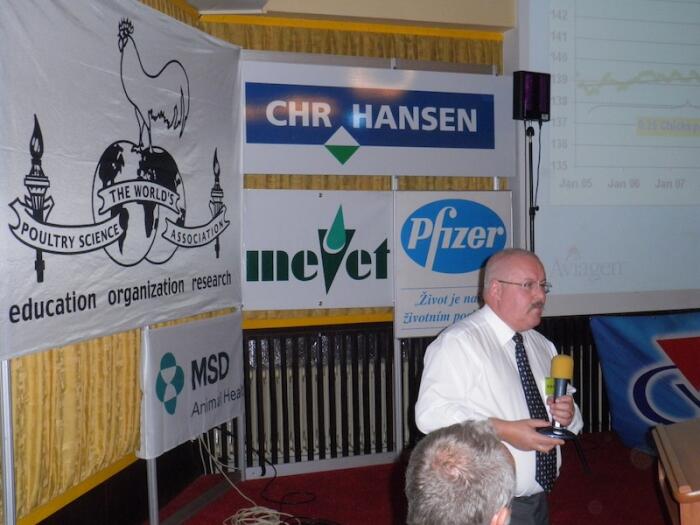 Ross Breeders later became part of what is today Aviagen. “Ross Breeders felt like a company with exciting potential and global opportunities, yet based in my home country,” Jim remembers. He spent 37 years with the company, retiring in 2016 as Breeding Program Director.
The UK breeding program was established at Newbridge, Scotland, in 1956, and by 1978 pure line breeding programs were established in New Zealand, South Africa and the United States, thus strengthening security of supply. This “fascinating complexity and variety” of chickens across these regions captured Jim's interest.
He was entering poultry breeding at a time of significant change. “Back then, chicken was still more likely to be a Sunday roast than an everyday meal, and poultry breeding looked very different,” Jim recalls. “There was a strong drive to keep improving the bird and responding to the needs of poultry producers.”
The birth of balanced poultry breeding
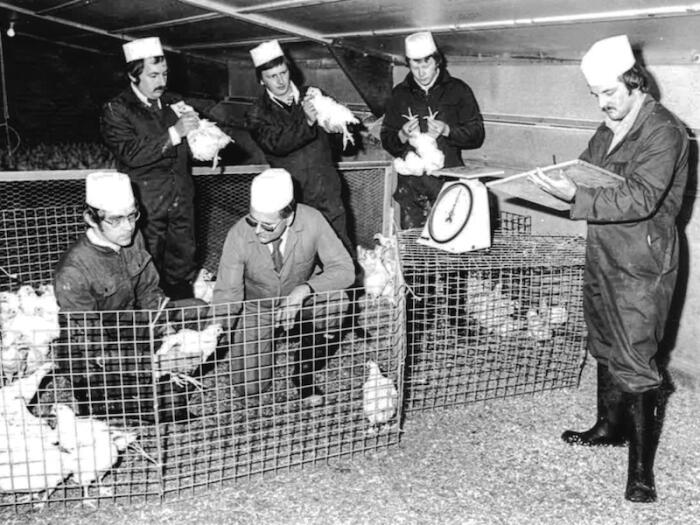 A major challenge was reducing the cost of producing chicken, from the day-old chick to the finished broiler, helping make it more accessible to families.
By the late 1970s, the pedigree program was selecting for reproductive performance alongside healthy broiler growth.
But resource efficiency was only part of the goal. “Selection also included welfare traits like robustness, skeletal strength and disease resistance,” Jim explains.
These advances helped lay the groundwork for balanced breeding, improving multiple characteristics without pursuing one at the expense of another. The principle remains central to Aviagen's breeding program today.
As poultry companies became more vertically integrated, producers gained a clearer view of the importance of balancing breeder and broiler performance. “Seeing the Ross brand fit this need was deeply satisfying,” Jim says.
The right bird for the right market
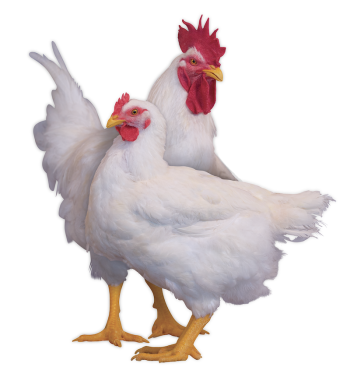 Markets had different needs, too. “The Ross breed portfolio offered a range of breeding options for global markets, while changing U.S. consumer preferences contributed to the development of the Ross 708, with greater emphasis on breast meat yield,” Jim recalls.
These breeding choices contributed to the diverse portfolio of Ross broiler breeding stock Aviagen offers today.
“I’m most proud of how our work and innovations have advanced poultry breeding across Aviagen’s portfolio and the wider industry. It is especially rewarding to reflect on how Ross has evolved and earned the trust of poultry producers around the world through a balanced approach to bird welfare, sustainability and robustness.” – Jim McAdam, Retired Breeding Program Director at Aviagen Ltd.
Adapting human medicine innovations for poultry breeding
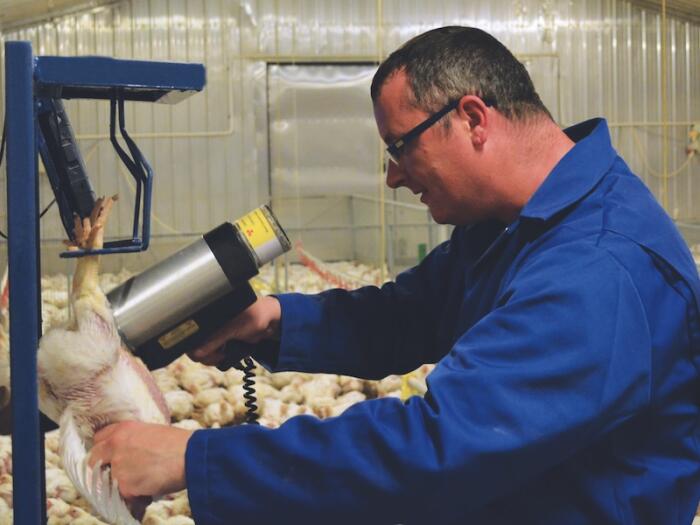 X-rays were introduced to aid selection for leg bone quality, followed by ultrasound to assess breast meat yield. In 1991, the oximeter enabled measurement of blood oxygen levels, giving insight into heart and lung function and helping reduce ascites while promoting bird health and welfare.
“At the time, these technologies were probably as groundbreaking as you can get,” Jim says. “They'd never been seen in poultry production before. Many of the ideas originated in human medicine and were adapted to address poultry health challenges.”
“It was (and still is) a case of putting the technology to work and then asking: ‘Does it actually work? Does it make a difference?’ We never rest on what we're doing today. We're always asking: ‘Can we do it a bit better?’” says Jim.
Jim is quick to place his generation within a much larger story. He recognizes early pioneers Alan Gristwood, John Ewart and Nigel Barton, followed by geneticists Craig Morton, Derek Emmerson, Alfons Koerhuis and Peter Hagenbuch. He also acknowledges Jimmy Wilson's pioneering work in the physical selection of individual birds.
For Jim, each generation built on the work of those before it.
“All the time we were just making a step and going a bit forward, doing the best we could to hand on to the next generation.”
Although Jim retired in 2016, chickens have never quite left his life. At home, three “spoiled elderly ladies” keep him connected to the birds that have fascinated him since the beginning. And, he reports, they still provide the occasional egg.